
 Image 1 of 1
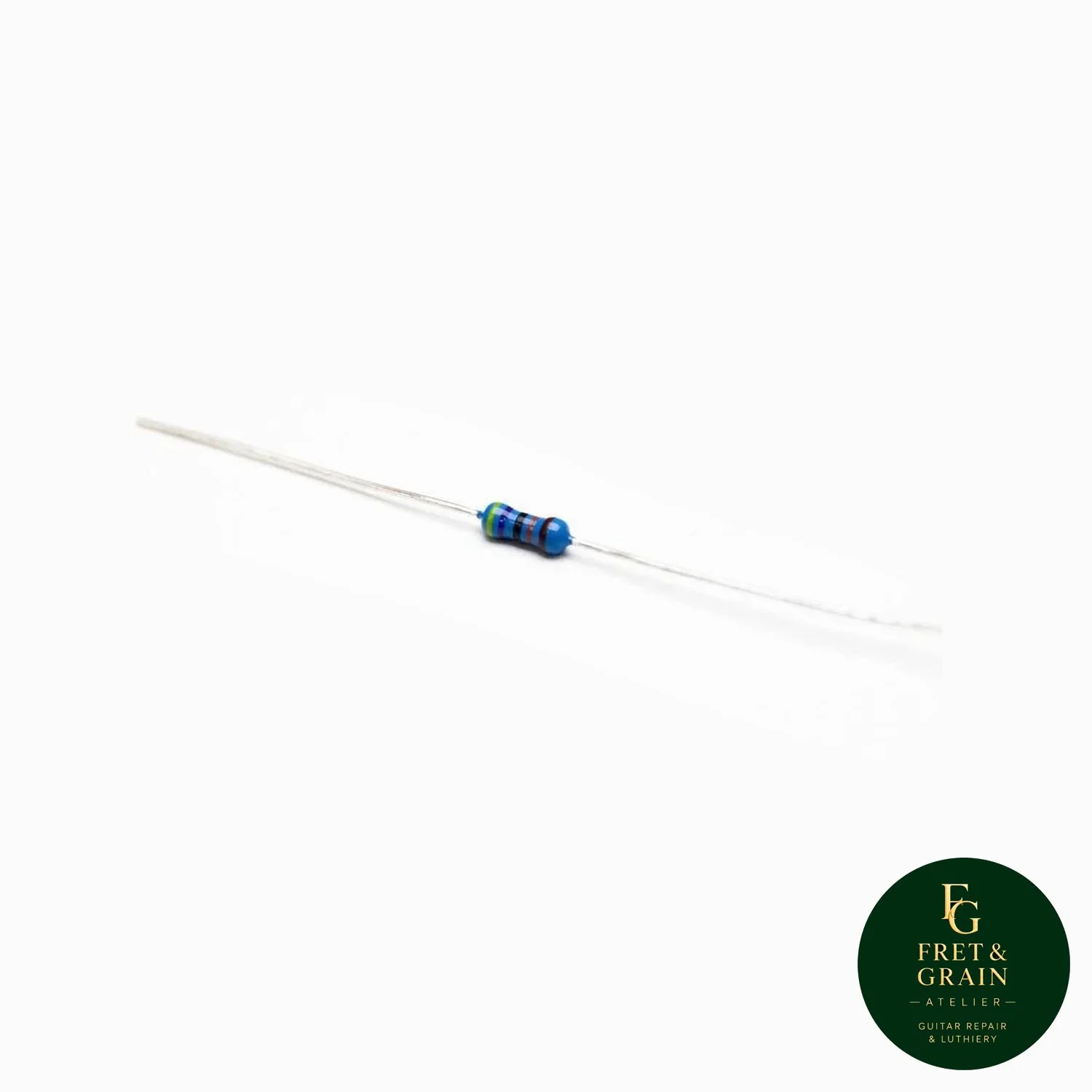
A 4.7KΩ resistor can be used to create a partial coil tap, retaining part of the bypassed humbucker coil instead of completely switching it off.
Connected in parallel with the coil, the resistor reduces the amount of the coil that is bypassed, helping retain more output, body and low-end than a conventional coil split.
For example, with a 3.8KΩ coil:
[
R_{\text{effective}}=\frac{3.8k\times4.7k}{3.8k+4.7k}\approx2.10KΩ
]
More output than a full coil split
Fuller response with improved body
Better low-end retention
Clearer, more single-coil-like character
A balanced compromise between a conventional split and a full humbucker
PARTIAL COIL TAP – RESISTOR VALUE COMPARISON
Based on a 3.8KΩ humbucker coil:
3.3KΩ Resistor = 1.77KΩ Effective Resistance
4.7KΩ Resistor = 2.10KΩ Effective Resistance
6.2KΩ Resistor = 2.36KΩ Effective Resistance
7KΩ Resistor = 2.45KΩ Effective Resistance
8.2KΩ Resistor = 2.60KΩ Effective Resistance
10KΩ Resistor = 2.75KΩ Effective Resistance
Formula:
R effective = (R coil × R resistor) ÷ (R coil + R resistor)
Lower resistor values produce a stronger coil-bypass effect, while higher resistor values tend to preserve more of the coil's contribution.
Note: Effective resistance is a theoretical electrical calculation and does not directly represent the percentage of coil retained or guarantee a specific tonal result.
A 4.7KΩ resistor can be used to create a partial coil tap, retaining part of the bypassed humbucker coil instead of completely switching it off.
Connected in parallel with the coil, the resistor reduces the amount of the coil that is bypassed, helping retain more output, body and low-end than a conventional coil split.
For example, with a 3.8KΩ coil:
[
R_{\text{effective}}=\frac{3.8k\times4.7k}{3.8k+4.7k}\approx2.10KΩ
]
More output than a full coil split
Fuller response with improved body
Better low-end retention
Clearer, more single-coil-like character
A balanced compromise between a conventional split and a full humbucker
PARTIAL COIL TAP – RESISTOR VALUE COMPARISON
Based on a 3.8KΩ humbucker coil:
3.3KΩ Resistor = 1.77KΩ Effective Resistance
4.7KΩ Resistor = 2.10KΩ Effective Resistance
6.2KΩ Resistor = 2.36KΩ Effective Resistance
7KΩ Resistor = 2.45KΩ Effective Resistance
8.2KΩ Resistor = 2.60KΩ Effective Resistance
10KΩ Resistor = 2.75KΩ Effective Resistance
Formula:
R effective = (R coil × R resistor) ÷ (R coil + R resistor)
Lower resistor values produce a stronger coil-bypass effect, while higher resistor values tend to preserve more of the coil's contribution.
Note: Effective resistance is a theoretical electrical calculation and does not directly represent the percentage of coil retained or guarantee a specific tonal result.